
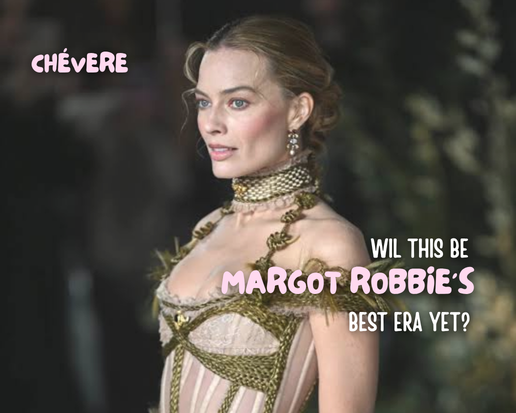
After Barbie turned her into the face of a cultural phenomenon, Margot Robbie is stepping into a different kind of spotlight—one that looks a lot like old-school movie stardom.
Margot Robbie is in Paris.
And somehow, that already feels like the beginning of a movie.
Over the past few weeks, she has been photographed leaving the Ritz, walking through rainy Paris in Chanel, wearing tiny denim shorts on coffee runs, and—more importantly—filming the upcoming Ocean’s Eleven prequel alongside Bradley Cooper.
Then the first photos from set appeared.
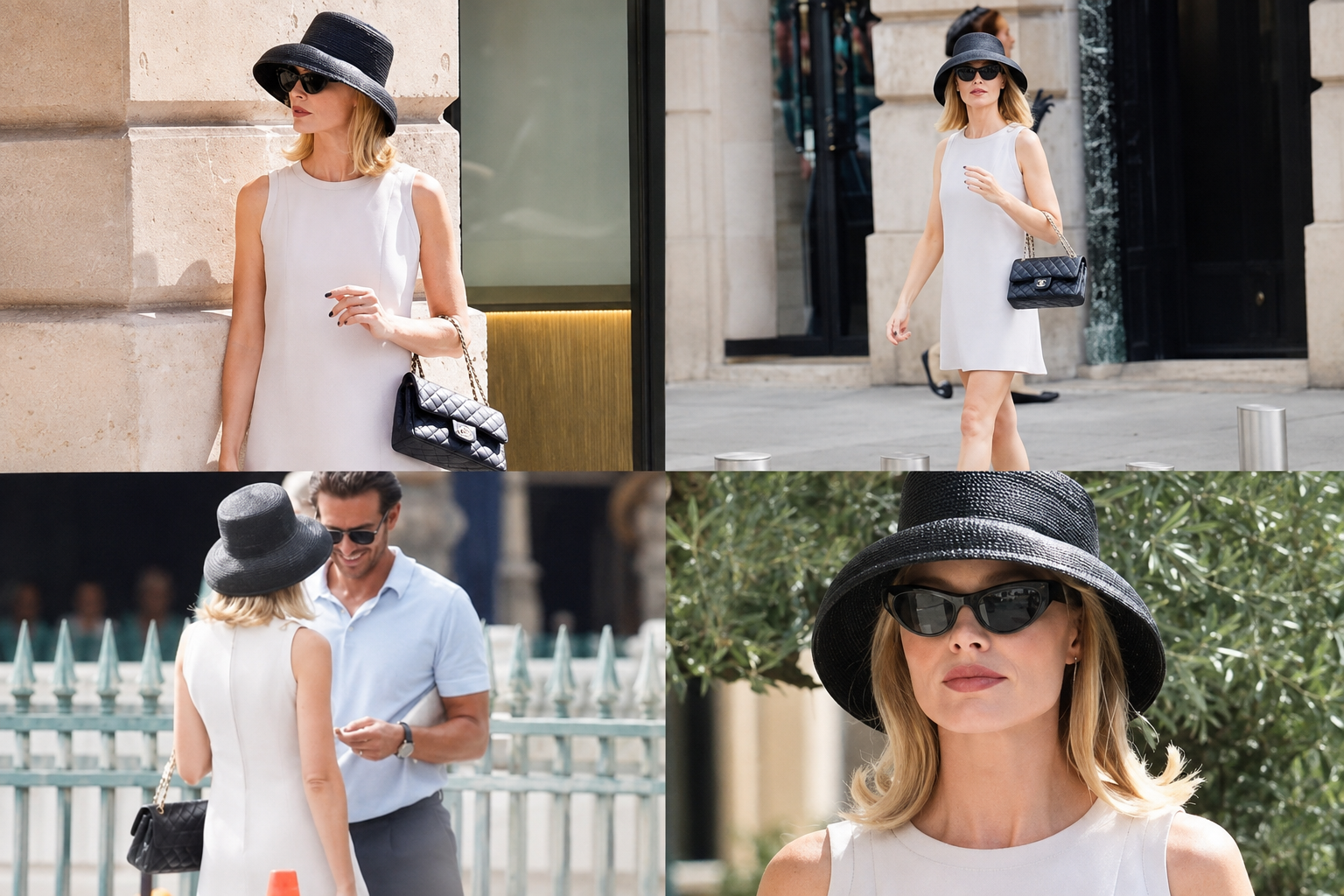
Robbie in a cream-colored ’60s mini dress. Black gloves. Cat-eye sunglasses. A flipped bob. The kind of look that immediately started circulating online before anyone had seen a second of actual footage from the film.
It even earned comparisons to Meredith Blake from The Parent Trap, which, naturally, made the internet love it more.
Something about the entire moment feels very Margot Robbie.
And it also feels like the beginning of another era.
Not because she ever really went anywhere.
But because after spending the last few years becoming one of Hollywood’s most powerful actors and producers, Robbie appears to be entering the stage of her career where she doesn’t have to prove that she is a movie star anymore.
She gets to decide what kind of movie star she wants to be.
First, There Was Barbie
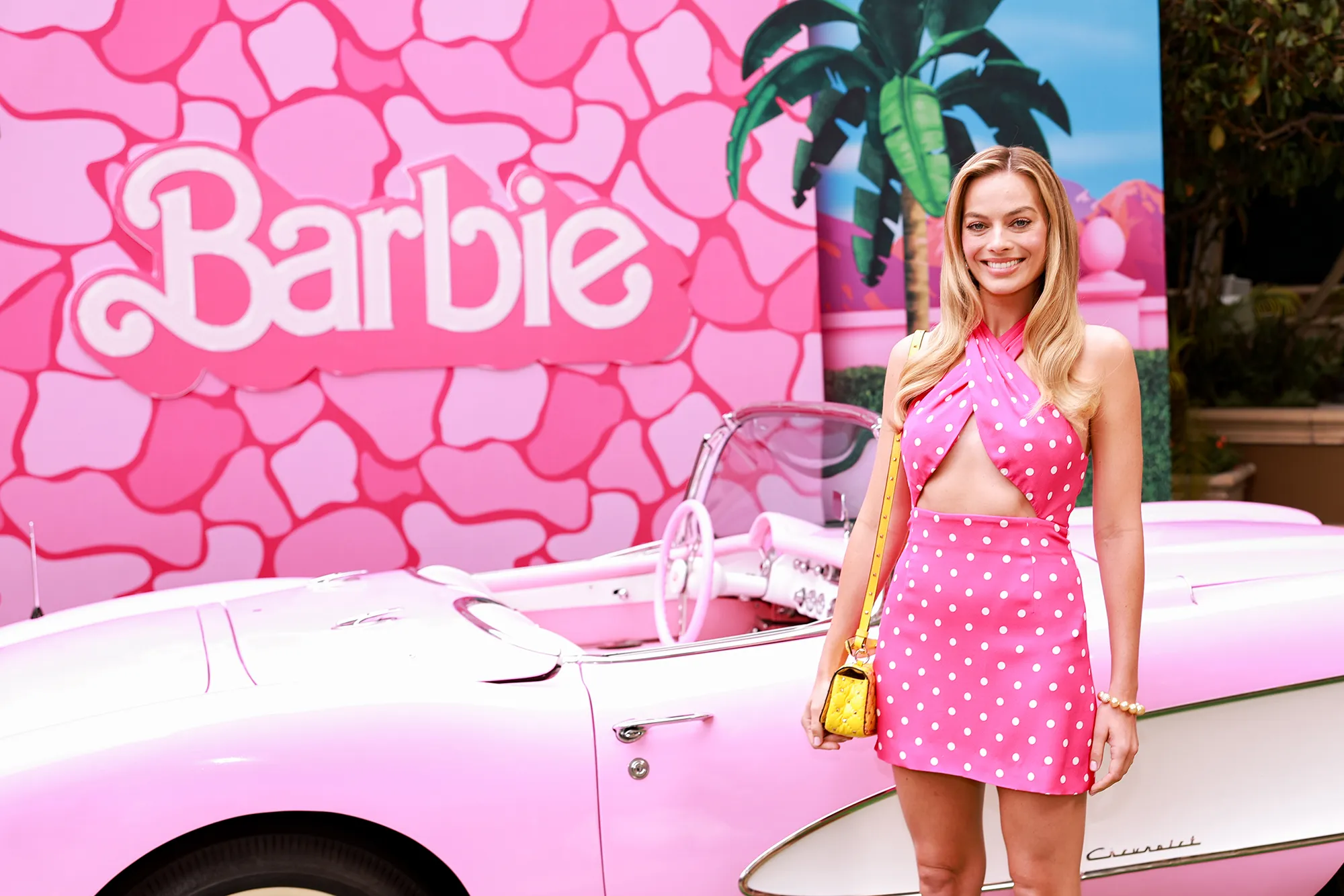
It is almost impossible to talk about Margot Robbie’s career now without dividing it into before and after Barbie.
The film was bigger than a movie.
For several months in 2023, pink was everywhere. Barbie collaborations appeared on practically anything that could legally be turned pink. The press tour became its own fashion event. Greta Gerwig became one of Hollywood’s most commercially powerful directors, Ryan Gosling turned Ken into a cultural personality, and Margot Robbie became the very literal face of the entire thing.
But Robbie’s role in Barbie was always more interesting than simply playing Barbie.
She was also one of the people responsible for getting the movie made.
Through LuckyChap—the production company she runs with Tom Ackerley and their partners—Robbie pursued the Barbie rights and helped bring the project to Greta Gerwig. Years before anyone knew whether audiences actually wanted a slightly existential movie about a Mattel doll, Robbie saw the potential.
That distinction matters.
Because Barbie didn’t simply prove Margot Robbie could open a massive movie.
It proved she could help create one.
And that changed her position in Hollywood.
So What Do You Do After Barbie?
That is the interesting question.
Trying to manufacture another Barbie immediately would probably be impossible.
You cannot schedule another once-in-a-decade cultural phenomenon for next Thursday.
Instead, Robbie seems to be doing something considerably smarter: moving on.
Her current project is an untitled Ocean’s Eleven prequel set around the 1962 Monaco Grand Prix Robbie has said that the movie follows Danny Ocean’s parents—the two masterminds who apparently taught the future casino thief everything he knows.
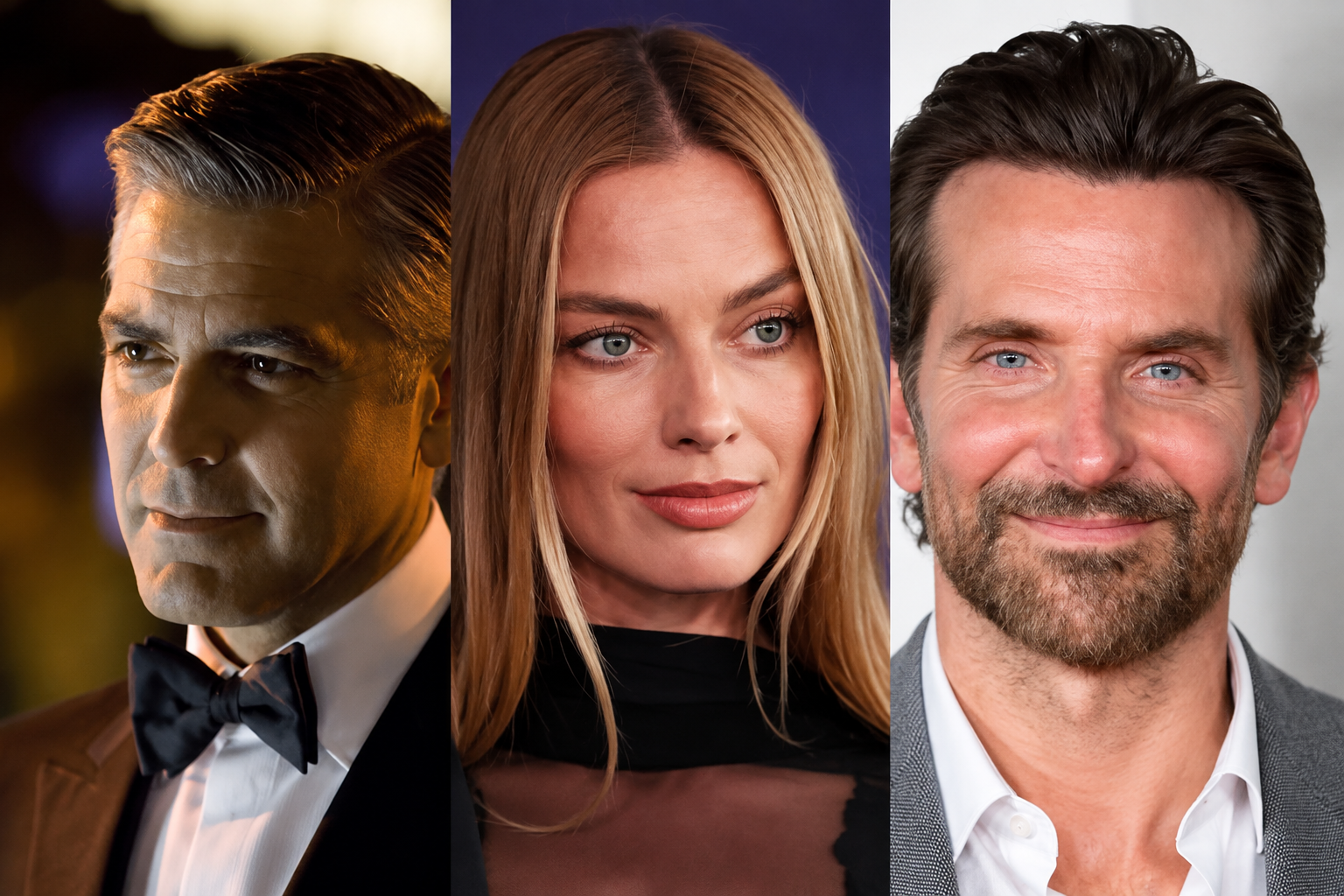
Bradley Cooper is starring opposite her, writing and directing the film, while LuckyChap is among its producers. Warner Bros. currently has it scheduled for June 25, 2027.
Already, the setting tells you everything you need to know about the fantasy.
Monaco.
1962.
A heist.
Beautiful people.
Beautiful clothes.
Probably an irresponsible number of convertibles.
It is exactly the kind of project that allows Robbie to move into a slightly different register.
Less Barbie.
More movie star.
And Then There Are the Clothes
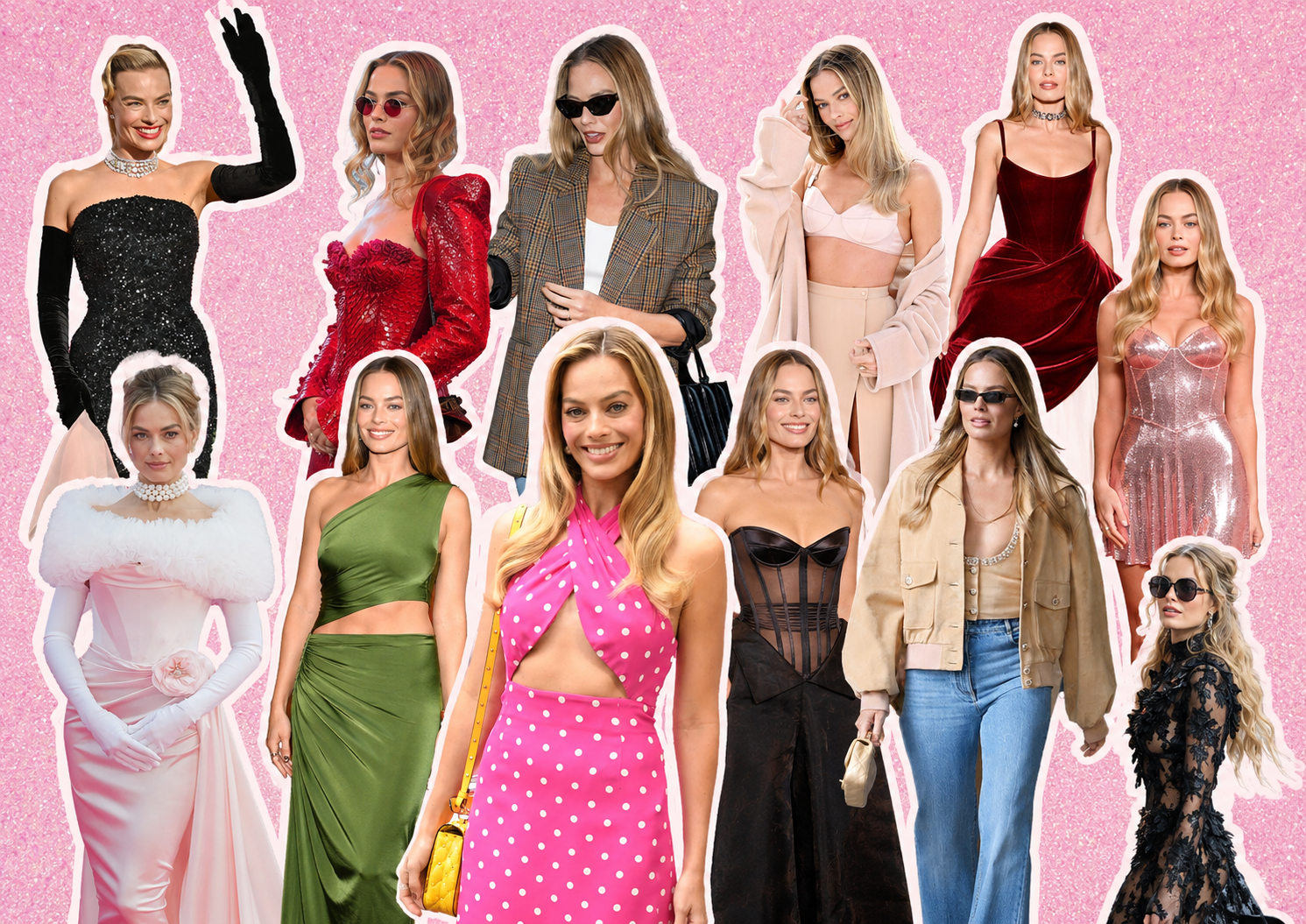
Of course there are.
Robbie has always had a complicated relationship with fashion in the public imagination.
There was the Chanel era. The Barbie press tour, when stylist Andrew Mukamal transformed practically every appearance into a piece of Barbie archival research. More recently, she has moved into something noticeably less literal.
And Paris has been particularly good to her.
Her off-duty wardrobe while filming Ocean’s has bounced between Chanel accessories, tiny denim shorts, romantic black corsetry, ballet flats, slouchy Khaite boots, simple skirts and that extremely specific type of outfit that makes you think, I could wear that, until you realize the handbag costs several months of rent.
There is less costume happening now.
During Barbie, the clothes were part of the marketing machine. Every outfit referenced a doll, a decade, or Barbie mythology.
Now the fashion feels more like Margot.
That might seem like a small distinction, but celebrity fashion often tells us where someone is in her career before an interview ever does.
The pink uniform has been retired.
The woman underneath it is back.
Margot Robbie Isn’t Just the Face of the Movie Anymore
And this may be the most important part of her second act.
Robbie increasingly occupies a position that very few actors reach: she can be both the star in front of the camera and one of the people making decisions behind it.
LuckyChap has become a serious Hollywood production company rather than a celebrity vanity label.
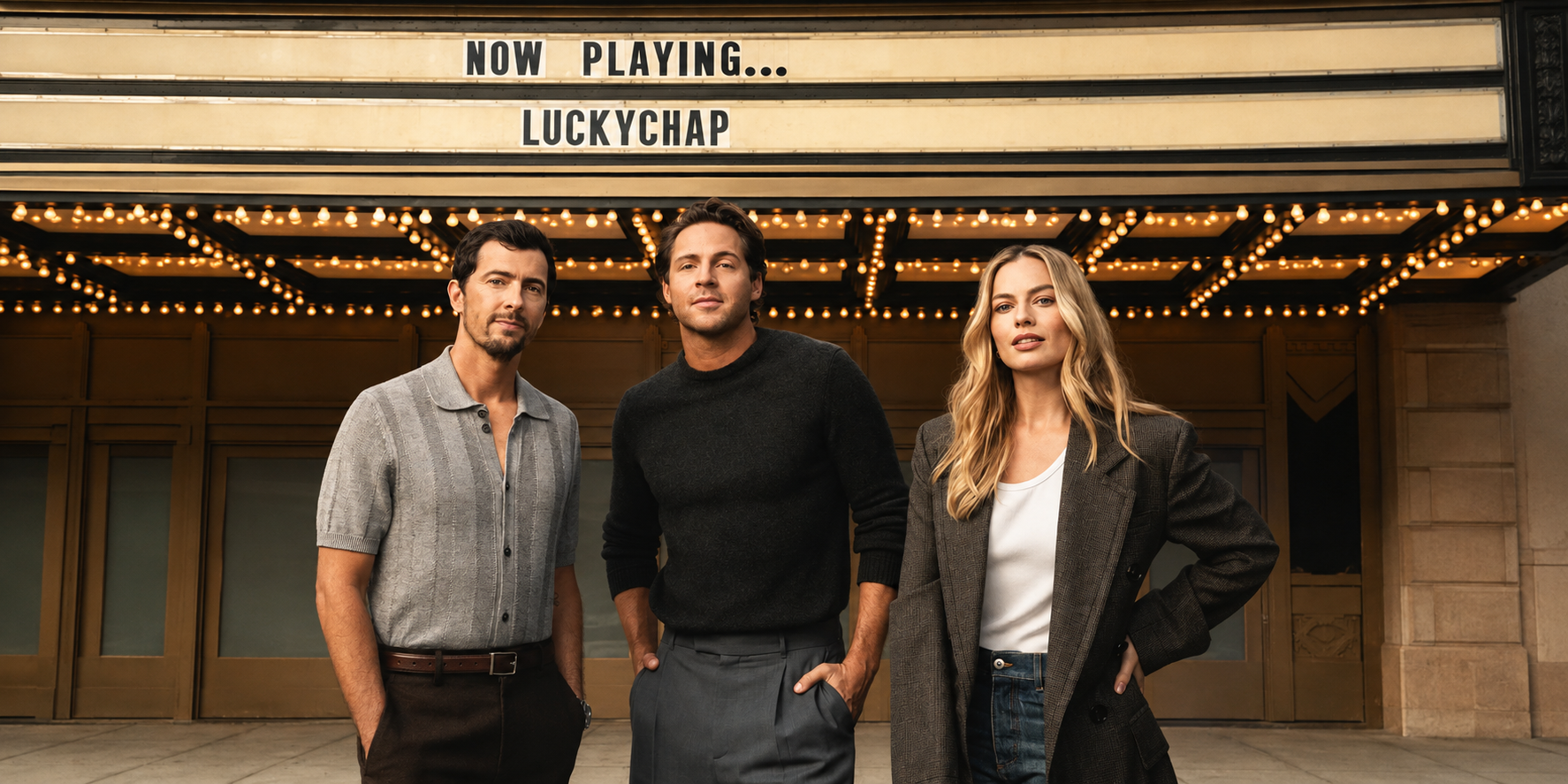
Its projects have included I, Tonya, Promising Young Woman, Saltburn, Barbie and other films and television projects that don’t necessarily look like one another—which is probably the point.
The company is also producing the new Ocean’s film.
That gives Robbie something many generations of actresses had to fight much longer to obtain: control.
She doesn’t have to wait around for Hollywood to decide what a Margot Robbie movie should look like.
She can help decide.
And maybe that is what separates this era from the ones before it.
When Robbie broke through in The Wolf of Wall Street, audiences were discovering her.
By I, Tonya, she was proving she could carry complicated material.
Harley Quinn proved she could become synonymous with a franchise character.
Barbie proved she could sit at the center of something enormous.
Now?
There is much less left to prove.
The Return of the Movie Star
There is also something increasingly rare about Robbie herself.
We know who she is without really knowing everything about her.
That sounds ordinary, but in modern celebrity culture, it isn’t.
She has social media, obviously. She does interviews. She attends premieres. Paparazzi photograph her.
But Margot Robbie has never built her celebrity around letting the public watch every moment of her life.
There are no daily livestreams.
No running commentary on every headline.
No constant attempt to turn herself into content.
You see her when there is something to see.
And that little bit of distance gives her something Hollywood used to understand exceptionally well:mystique
The great movie stars have always seemed simultaneously familiar and unreachable.
You know their face.
You know their movies.
You might know what they wore last night.
But there is still enough separation between the actor and the audience that seeing them on a giant screen feels different from seeing someone you scroll past twenty times a day.
Robbie has somehow managed to hold onto that.
And as celebrity becomes increasingly accessible, accessibility itself may be becoming less interesting.
Maybe This Is the Grown-Up Margot Era
Even the Ocean’s project feels symbolic.
The original Ocean’s Eleven movies worked because everyone in them seemed impossibly charismatic.
George Clooney wasn’t simply playing Danny Ocean. He was playing George Clooney playing Danny Ocean.
Brad Pitt ate snacks in expensive suits.
Julia Roberts walked into rooms like Julia Roberts.
The films understood that movie-star presence was part of the entertainment.
Casting Robbie in that universe makes sense for the same reason.
She does not need to disappear completely into a character for you to want to watch her.
Sometimes watching Margot Robbie be extremely glamorous while stealing something in Monaco is enough of a premise.
And after years of Hollywood chasing intellectual property, algorithms, cinematic universes and whatever happened to be trending online that week, there is something refreshing about that idea.
Put two movie stars somewhere beautiful.
Give them good clothes.
Let them commit crimes.
Roll camera.
So, Is This Really a New Margot Robbie Era?
Maybe “new” isn't quite the right word.
It feels more like a consolidation of everything that came before it.
The actress.
The producer.
The fashion figure.
The celebrity who can dominate a press tour and then disappear again.
The woman who helped turn a plastic doll into a billion-dollar cultural event and apparently decided the logical next move was to go rob the Monaco Grand Prix.
Margot Robbie no longer needs one defining role.
She has reached the much more interesting stage where Margot Robbie herself is the draw.
And that might be the difference between becoming famous and becoming a movie star.
Barbie made her unavoidable.
This next era looks like it might make her timeless.
Until next week — stay chévere